
After the National Students’ Health Conference: Why prioritise a pleasure over a biological natural reality? The question of the condoms over Pads.
A girl cannot postpone menstruation because she lacks money. She cannot negotiate with biology. She cannot "abstain" from her menstrual cycle.
06 Jun, 2026
Share
Save
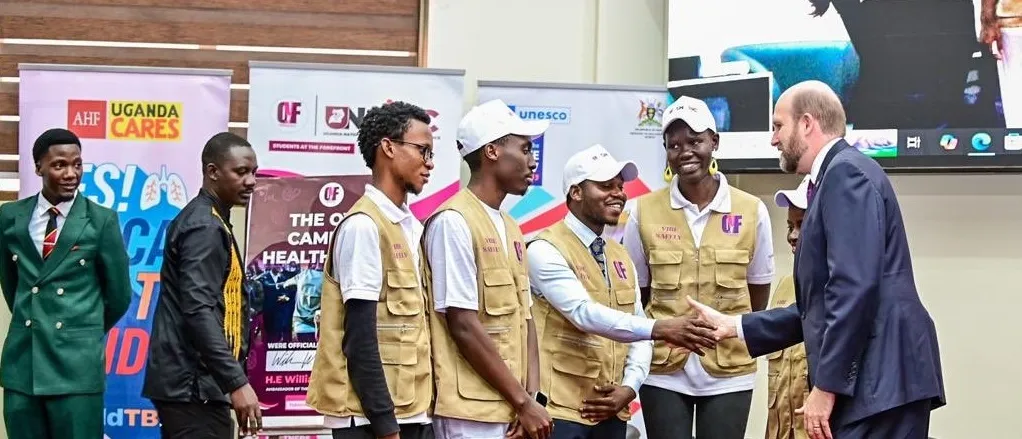
I was compelled to write this after attending the recent National Students’ Health Conference. For hours, experts, students, policymakers, activists, and health professionals discussed youth health, reproductive rights, HIV prevention, mental health, and sexual behaviour. Yet one issue remained almost invisible in the conversations: menstrual health.
It was astonishing.
We spoke extensively about condoms. We discussed family planning. We analysed sexually transmitted infections. We debated reproductive health policies. But barely anyone paused to ask a simple question:
Why is a condom available for free in many health centres, public campaigns, universities, and community outreaches, yet a sanitary pad remains unaffordable for millions of girls?
A condom prevents a possibility. A sanitary pad manages a biological certainty. One is a preventive public health intervention. The other is a monthly necessity for survival with dignity. Yet Uganda has normalised free access to one while treating the other as a personal luxury.
A Question of Public Priorities
The Ugandan government has invested significantly in free condom distribution through public health systems as part of HIV/AIDS prevention strategies. The Ministry of Health's condom programming framework explicitly supports free distribution through public sector channels and community networks.
No one seriously argues against this. In fact, it is sound public policy. Condoms reduce HIV transmission, prevent sexually transmitted infections, and lower unintended pregnancies.
But if the state recognises that preventing disease justifies free access to condoms, why does the same logic not apply to menstrual products that directly affect education, dignity, mental health, and reproductive health?
A girl cannot postpone menstruation because she lacks money. She cannot negotiate with biology. She cannot "abstain" from her menstrual cycle.
The Silent Emergency
Across Uganda, menstruation remains one of the least discussed barriers to education. Recent reports indicate that nearly two-thirds of schoolgirls miss classes during menstruation, largely because of inadequate access to sanitary products and proper facilities.
Behind these statistics are real lives. A girl sitting at the back of a classroom afraid to stand. A student missing examinations because she has no pad. A teenager using old cloth, newspapers, or unsafe materials because a packet of sanitary towels costs more than what her family can spare.
Many girls do not merely experience inconvenience. They experience humiliation. And humiliation is a powerful force in pushing students out of school.
As the philosopher Martha Nussbaum argues, a just society must create conditions that allow individuals to live with dignity and develop their capabilities. Education is one such capability. Menstrual poverty directly undermines it.
The Contradiction We Refuse to Address
Uganda has spent decades fighting HIV/AIDS. The country deserves recognition for many of those efforts. Yet there is a contradiction at the heart of our public health priorities. We distribute condoms because we understand that prevention is cheaper than treatment.
But when girls develop infections from unhygienic menstrual materials, when they miss school, when they drop out, and when their economic prospects diminish, society bears the cost later.
The economist Amartya Sen famously argued that development should be measured not merely by income but by people's freedoms and capabilities. What freedom does a girl possess when attending school depends on whether she can afford a sanitary pad? What capability is being expanded when menstruation becomes a monthly obstacle to education?
Uganda's Current Position
Uganda has made important strides in recognising menstrual health. The 2015 Menstrual Hygiene Management Charter called for government, civil society, and development partners to improve access to menstrual products and menstrual health education.
More recently, Uganda has launched Menstrual Health Guidelines for Schools and Institutions and is working through the Uganda National Bureau of Standards to improve the quality and affordability of menstrual products.
These are commendable steps. But guidelines alone do not place a pad in a student's hands. Standards alone do not keep a girl in class. The challenge remains affordability and universal access.
Lessons from Scotland and Kenya
The world has already shown us possible paths. In Scotland, menstrual products are legally available free of charge through public institutions, making the country a global pioneer in menstrual equity.
In Kenya, free sanitary pads are provided in public schools, and menstrual health has become a significant policy concern.
These countries recognised something simple:
Menstrual health is not charity. It is infrastructure. Just as governments build roads to facilitate movement, they must build systems that allow girls to learn, participate, and thrive.
Beyond Health: A Matter of Justice
The French philosopher Simone de Beauvoir wrote that society often turns biological differences into social disadvantages.
Menstruation itself is not the problem. The problem is constructing a society where menstruation becomes a reason to miss school, lose confidence, or abandon opportunity.
When a student drops out because she cannot afford menstrual products, that is not merely a health issue. It is an educational issue. An economic issue. A gender issue. A human rights issue.
What Should Uganda Do?
The conversation should move beyond awareness campaigns.
Uganda should seriously consider:
Free sanitary pads in all public schools.
Dedicated menstrual health budgets at the district and national levels.
Distribution through health centres, schools, and community health workers.
Removal of all financial barriers that increase pad costs.
Comprehensive menstrual health education for both girls and boys.
Emergency menstrual product stations in universities and tertiary institutions.
If free condoms can be distributed because public health matters, then free sanitary pads should be distributed because public health, education, and human dignity matter too.
The Question We Must Ask
The real question is not whether Uganda can afford to provide sanitary pads. The real question is whether Uganda can afford the consequences of not providing them. Every missed lesson. Every preventable infection. Every girl who drops out. Every dream interrupted by a biological process she never chose.
Those costs are far greater than the price of a pad.
As I left the National Students' Health Conference, one thought remained with me:
A nation reveals its priorities not by what it says, but by what it funds. If we truly believe that education is the key to development, then no girl's education should be interrupted because of menstruation.
"And if condoms can be treated as a public necessity, then perhaps it is time we finally recognise sanitary pads as one too."
Photo Credit: US. Embassy in Uganda
About the author
My name is Abeson Alex, a student at St. Lawrence University, whose leadership journey reflects a deep commitment to service, integrity, and community transformation. I have held various leadership positions, including UNSA President of St. Charles Lwanga College Koboko, UNSA District Executive Council Speaker, UNSA Speaker for West Nile, and West Nile Representative to the UNSA National Executive Council. I also served as YCS Section Leader of St. Charles Lwanga College Koboko, YCS Federation Leader for Koboko District, and Koboko YCS Coordinator to the Diocese. In addition, I was a Peace Founder and Security Council Speaker for the peace agreement between St. Charles Lwanga College Koboko and Koboko Town College. I served as Debate Club Chairperson of St. Charles Lwanga College Koboko, District Debate Coordinator, and West Nile Debate Coordinator to the National Debate Council (NDC). All the above were in 2022-2023. My other leadership roles include Chairperson of the Writers and Readers Club, UNSA Representative in the District Youth Council, Students’ Advocate for Reproductive Health, and Students’ GBV Advocate for the District. Within the Church, I served as Chairperson of the Altarservers of Ombaci Chapel, Parish Altarservers Chairperson of Koboko Parish, and Speaker of the Altarservers Ministry in Arua Diocese. Current Positions: Currently, I serve as the Diocesan Altarservers Chairperson of Arua Catholic Diocese, Advisor of the Altarservers Ministry for both Ombaci Chapel and Koboko Parish, and Programs Coordinator of Destined Youth of Christ (DYC-UG). I am also a Finalist in the Global Unites Oratory Competition 2024, the current Debate Club Speaker and President of St. Lawrence University Koboko Students Association. Additionally, I am the Youth Chairperson of Lombe Village, Midia Parish, and Midia Sub-county in koboko district. I am one whose life has been revolving around ensuring that in our imperfections as humans, we can promote transparency, righteousness, and morality to attain perfection. I am inspired by the guiding words: Mobilization, Influence, Engagement, and Advocacy. I share my inspiration across the fields of Relationships, Career, Governance, Faith, Education, Spirituality, Anti-corruption, Environmental Conservation, Business & Self-Reliance, politics , Administration,Financial Literacy, Religion, and Human Rights. Thanks for the encounter.